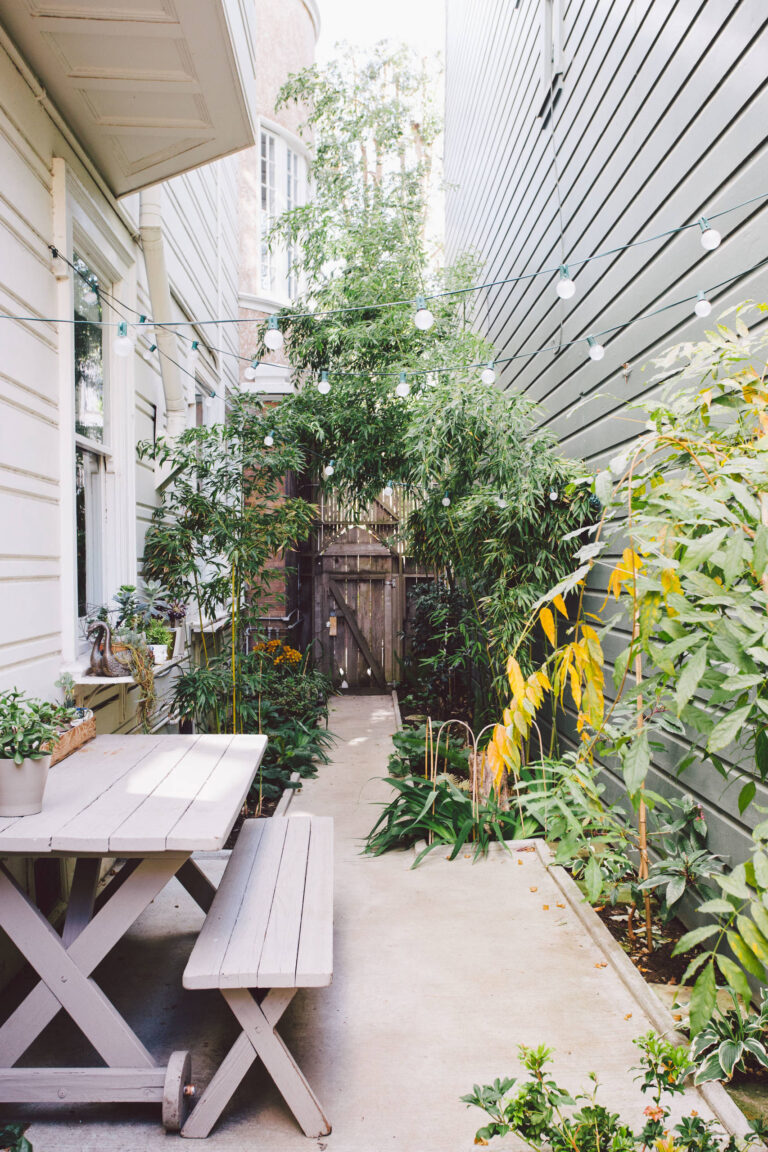
There is a profound stillness in a Japanese courtyard garden — a place where raked gravel becomes an ocean, where a single mossy stone holds the weight of a mountain, and where a trickle of water sounds like a distant stream. You’ll love how a japanese courtyard garden transforms even the smallest urban courtyard into a meditation on nature, time, and balance. Picture a bonsai tree centuries old, stepping stones worn smooth by imaginary footsteps, and a tsukubai (stone water basin) that invites you to pause and cleanse your hands before entering.
These japanese courtyard garden inspirations range from karesansui (dry rock gardens) with raked white gravel to lush tsubo-niwa (small enclosed gardens) filled with moss and ferns, from tiny indoor courtyards with a single bonsai to larger spaces with bridges over koi ponds. Each one captures the essence of wabi-sabi — the beauty of imperfection, the elegance of simplicity, and the deep calm of a garden designed not to be seen all at once, but discovered slowly, step by careful step.
1. Stone and Moss – A Quiet Dialogue Between Rock and Lawn
Unfurl this serene corner where a few carefully placed stones rest on a carpet of soft green moss, surrounded by a simple expanse of grass. Japanese courtyard garden design often uses the contrast between stone and vegetation to create a sense of tension and harmony. You’ll love how the moss softens the rocks’ hard edges, making them look as though they’ve been there for centuries.
Every japanese courtyard garden element here whispers patience: the rocks are positioned to look natural, the grass is kept neatly trimmed but not manicured, and the overall feeling is one of quiet acceptance. It’s a garden that doesn’t try to impress — it simply exists, like a mountain that has always been there.
2. Foreground Stones, Background Trees – Layered Depth in a Small Space
Step into this layered composition where large rocks anchor the foreground, while carefully pruned trees and shrubs rise behind them, creating a sense of borrowed scenery. Japanese courtyard garden design uses foreshortening to make small spaces feel vast — the rocks seem close, the trees far away. You’ll appreciate how your eye travels from the textured stones to the smooth leaves, finding rest at each stop.
This japanese courtyard garden technique is called “mitate” — the art of suggesting a larger landscape in miniature. The rocks might represent islands, the trees distant mountains. It’s a garden that rewards quiet contemplation, inviting you to see not just what’s there, but what could be.
3. Tsubo-niwa – An Indoor Courtyard with Bonsai and Stone
Breathe in the calm of this indoor courtyard, where a small patch of grass, a few river stones, and a sculptural bonsai tree coexist in perfect miniature. Japanese courtyard garden is not just for outdoor spaces — a tsubo-niwa (literally “jar garden”) can be as small as a few square feet, tucked inside a home. You’ll love how the bonsai, with its twisted trunk and delicate leaves, becomes the focal point of the entire room.
This japanese courtyard garden is a living meditation. The grass is soft beneath imaginary feet, the stones are cool to the touch, and the bonsai changes with every season — first buds, then leaves, then a bare silhouette against winter light. It’s a garden that brings the outside in, and the inside out.
4. Zen Gravel Garden – A Dry Landscape with Bonsai and Raked Sand
Rake your own patterns into this sea of white gravel, where a single bonsai tree and a few dark stones rise like islands from the waves. Japanese courtyard garden in the karesansui (dry landscape) style is meant to be viewed from a single vantage point, inviting you to imagine water flowing around the rocks. You’ll appreciate how the raked lines are both a meditation and a maintenance ritual.
This japanese courtyard garden is the most iconic form of Zen gardening. The gravel represents water, the stones represent mountains or islands, and the empty space is as important as the filled. Raking the gravel daily becomes a moving meditation, a practice of mindfulness that centers the gardener as much as the garden.
5. Illuminated Stillness – A Night Garden with Rocks and Trees
Watch as the setting sun gives way to soft uplighting in this small courtyard garden, the rocks casting long shadows and the trees glowing from within. Japanese courtyard garden design is not just for daytime — at night, strategic lighting reveals a different kind of beauty. You’ll love how the lights are placed low, mimicking moonlight and preserving the garden’s mysterious calm.
This japanese courtyard garden transforms after dark. The same rocks that seemed solid and heavy now appear to float in pools of light. The trees become silhouettes against the sky. It’s a reminder that a garden has two lives — one for the sun and one for the stars.
6. Courtyard Sanctuary – A Room Wrapped Around a Garden
Sit on the edge of this indoor courtyard, where the garden is completely surrounded by the building — a secret heart of stone and tree visible from every room. Japanese courtyard garden design often creates this kind of enclosure, turning the garden into a private world. You’ll appreciate how the architecture frames the garden like a living painting.
This japanese courtyard garden is the ultimate expression of inside-outside living. Sliding shoji screens can be opened to merge the garden with the room, or closed to create a mysterious glimpse of leaves and stone. The garden is never fully revealed, always partially hidden — an invitation to look closer.
7. Moon Bridge – An Arched Bridge Over a Koi Pond
Cross the red lacquered bridge that arches over a still pond, its reflection creating a perfect circle in the water below. Japanese courtyard garden with water features use bridges not just to cross, but to create a visual focal point and a symbolic journey. You’ll love how the koi fish glide beneath, their orange bodies flashing like living jewels.
This japanese courtyard garden element is both practical and poetic. The bridge represents the transition from the mundane world to a sacred space. The pond reflects the sky, doubling the garden’s apparent size. And the koi — each one a living brushstroke — add movement and color to an otherwise still composition.
8. The Three Friends – Rock, Grass, and Tree in Perfect Balance
Study the simple triangle formed by a single boulder, a patch of mossy grass, and a gracefully shaped maple tree in this courtyard garden. Japanese courtyard garden design often uses odd numbers (three, five, seven) to create visual balance without symmetry. You’ll appreciate how each element supports the others, like a conversation between old friends.
This japanese courtyard garden is a lesson in restraint. There are no flowers competing for attention, no bright colors to distract. Just the green of the moss, the gray of the stone, and the changing hues of the maple — from spring green to autumn red. It’s a garden that changes with the seasons, yet remains fundamentally itself.
9. Contemplation Seat – A Chair Facing a Garden of Stillness
Settle into the simple wooden chair placed at the edge of this courtyard garden, facing a composition of rocks, moss, and a single flowering cherry. Japanese courtyard garden design always includes a place to sit and contemplate — the garden is meant to be viewed, not just walked through. You’ll love how the chair is positioned to frame the best view.
This japanese courtyard garden is designed for one. The chair is solitary, the view is intimate, and the silence is profound. It’s a garden that asks nothing of you but your presence. Sit here in the morning with a cup of tea, or in the evening as the light fades. The garden will wait.
10. Step Down Into Green – A Sunken Courtyard
Descend the two steps into this indoor courtyard, where the floor is lower than the surrounding rooms, creating a feeling of being cradled by the earth. Japanese courtyard garden design sometimes uses sunken spaces to separate the garden from the living area while keeping it visually connected. You’ll appreciate how the grass and moss seem to climb up toward the windows.
This japanese courtyard garden feels like a secret. From above, you see only the tops of rocks and the curve of a bonsai. Once you step down, you’re surrounded by green — a hidden world within your home. It’s a garden that requires a deliberate transition, a small ritual of descent.
11. Miniature Crossing – A Tiny Bridge Over a Shallow Pond
Step across the small, flat bridge that spans a narrow pond in this courtyard garden — the water is only inches deep, but the crossing feels significant. Japanese courtyard garden design uses scale to create meaning: a tiny bridge is still a bridge, a small pond is still water. You’ll love how the bridge forces you to slow down, to place each foot with care.
This japanese courtyard garden element is about the journey, not the destination. The bridge is perhaps only three feet long, but it marks a transition — from the world of stone to the world of water, from the everyday to the sacred. Cross it slowly. The garden will reward your attention.
12. Courtyard Living Room – A Central Tree Anchoring the Space
Gather around the central tree in this courtyard garden, where comfortable couches are arranged in a circle beneath its spreading branches. Japanese courtyard garden design can include seating for conversation, as long as the garden remains the focus. You’ll appreciate how the tree’s trunk becomes the room’s natural sculpture.
This japanese courtyard garden is for gathering. The tree is the host, and the seating is arranged to face it as much as each other. The gravel crunches underfoot, the leaves rustle overhead, and the whole space feels like an outdoor living room — a place for tea, for talk, for quiet company.
13. Bonsai as Anchor – A Centuries-Old Tree in Miniature
Kneel before the bonsai tree that sits at the center of this courtyard garden, its gnarled trunk and delicate branches telling a story that spans decades. Japanese courtyard garden design often places a single bonsai on a stand, turning it into a living sculpture. You’ll love how the stepping stones lead your eye — and your feet — directly to it.
This japanese courtyard garden is a shrine to patience. The bonsai may be small, but it carries the weight of years of careful pruning, wiring, and watering. It’s a reminder that great beauty often comes from slow, attentive labor. The garden around it is simple — a few stones, some moss — so that the tree can be the star.
14. Emerald Necklace – A Pond Ringed by Ferns and Hostas
Listen to the soft trickle of water recirculating in this small pond, its edges crowded with lush ferns, hostas, and Japanese irises. Japanese courtyard garden with water features often use dense planting to blur the boundary between water and land. You’ll appreciate how the plants are chosen for their texture and shade tolerance.
This japanese courtyard garden is a cool, green refuge. The pond is shallow enough to see the pebbles on the bottom, the plants are chosen to thrive in the dampness, and the overall feeling is one of lush, contained wildness. It’s a garden that feels like a hidden spring in a deep forest.
15. Twilight Stones – A Rock Garden Under Evening Light
Watch as the low-angle sunlight of late afternoon catches the rough surfaces of these courtyard stones, each shadow deepening the texture of the rock. Japanese courtyard garden design is acutely aware of light — the same garden looks different at dawn, noon, and dusk. You’ll love how the trees cast long, graceful shadows across the gravel.
This japanese courtyard garden is a study in impermanence. The light is always moving, the shadows always shifting. A stone that seems heavy and dark in the morning can appear light and warm by evening. It’s a garden that asks you to visit at different times, to see it anew each day.
16. Lush Welcome – A Courtyard Overflowing with Green
Push aside the broad leaves of a fatsia japonica to enter this courtyard garden, where the plants are so lush you almost forget you’re indoors. Japanese courtyard garden design isn’t always sparse — sometimes it’s a dense, green jungle of shade-loving plants. You’ll love how the layered leaves create a sense of depth and mystery.
This japanese courtyard garden is for the plant collector. It’s packed with ferns, aucuba, hostas, and bamboos, all chosen for their ability to thrive in low light. The path is narrow, forcing you to brush against the leaves. The air is cool and moist. It’s a garden that feels like a greenhouse and a forest all at once.
17. Path of Light – Illuminated Stones Leading the Way
Follow the small solar lights tucked beside each stepping stone in this courtyard garden, their glow creating a path of gentle illumination. Japanese courtyard garden design uses light not to flood the space, but to guide the eye — and the foot — one step at a time. You’ll appreciate how the lights are low to the ground, mimicking fireflies.
This japanese courtyard garden is at its best at dusk. The path becomes a journey, each step lit just enough to be safe, not enough to lose the mystery. The rocks are shadows, the plants are silhouettes, and the whole garden is a quiet invitation to walk slowly, to notice each placement.
18. Pebble and Succulent – A Dry Garden in Miniature
Kneel down to see this tiny courtyard garden up close — small pebbles, a few smooth stones, and clusters of hardy succulents like sedum and sempervivum. Japanese courtyard garden design can be scaled down to a few square feet, perfect for a narrow side yard or a corner of a patio. You’ll love how the succulents’ fleshy leaves mimic the shape of the stones.
This japanese courtyard garden is ultra-low maintenance. The succulents need little water, the pebbles suppress weeds, and the whole composition can be installed in an afternoon. It’s proof that a Japanese-inspired garden doesn’t have to be large or labor-intensive — just thoughtful.
19. Bamboo and Water – An Indoor Pond with Living Walls
Listen to the water drip from a bamboo spout into a shallow basin, the sound as rhythmic as a heartbeat. Japanese courtyard garden design often includes a shishi-odoshi (deer scarer) — a bamboo fountain that fills with water, tips, and clacks against a stone. You’ll love how the sound is both a meditation and a gentle reminder of the garden’s presence.
This japanese courtyard garden is a sensory experience. The bamboo trees rustle in the breeze (or the air conditioning), the water is cool to the touch, and the rocks are rough and ancient-feeling. It’s a garden that engages all the senses — sight, sound, touch, and even smell (the bamboo has a fresh, green scent).
20. Bonsai and Basin – A Tsukubai Beneath a Miniature Tree
Bow slightly as you approach the tsukubai — a traditional stone water basin — set beneath the spreading branches of a bonsai pine. Japanese courtyard garden design often includes this element near the entrance, inviting visitors to purify themselves before entering. You’ll appreciate how the bonsai frames the basin, and the basin reflects the tree.
This japanese courtyard garden is a ritual in miniature. The tsukubai is low to the ground, forcing you to bend — an act of humility. The water is fresh, the ladle is wooden, and the act of washing your hands becomes a meditation. The bonsai watches over, centuries of patience distilled into a few feet of branch and trunk.
21. Island of Calm – A Central Rock Group Surrounded by Gravel
Circle the central arrangement of three rocks in this courtyard garden — one tall, one reclining, one almost hidden — each representing a different aspect of nature. Japanese courtyard garden design often groups rocks in odd numbers, creating a focal point that changes depending on your angle. You’ll love how the raked gravel flows around them like water around islands.
This japanese courtyard garden is a dry landscape, meant to be viewed from all sides. The rocks are chosen for their shape and character, not their size. The gravel is raked in concentric circles around them, suggesting waves or clouds. It’s a garden that is never still — your eye moves around it, finding new relationships with every glance.
22. Moss and Stone – A Carpet of Green Beneath Gray
Touch the velvety moss that grows between the stepping stones and creeps up the sides of the larger rocks — soft, cool, and forgiving. Japanese courtyard garden design often uses moss as a ground cover in shady spots, where grass would struggle. You’ll appreciate how the moss unifies the hardscape, blurring the edges between stone and soil.
This japanese courtyard garden is a study in patience. Moss grows slowly, and it requires consistent moisture and shade. But once established, it creates a carpet of deep green that feels ancient and wise. The stones seem to float on it, like stepping stones in a shallow sea. It’s a garden that rewards long-term care.
🏯 Stone Gardener’s Notes: 5 Gentle Practices for a Japanese Courtyard Garden
- 🍃 Start with a Single Stone: The essence of a japanese courtyard garden is not in its size or complexity, but in its intention. Begin with one stone that speaks to you — a weathered boulder, a smooth river rock, a piece of local granite. Place it where you can see it from your favorite sitting spot. That’s your garden. Add moss, gravel, or a small plant as you feel called. The stone is the anchor; everything else is a conversation with it.
- 🌊 Rake Gravel as Meditation: If you choose a dry garden (karesansui), the act of raking is as important as the garden itself. Each morning, take a small wooden rake and draw concentric circles around your stones, or straight lines that mimic flowing water. Japanese courtyard garden maintenance is not a chore — it’s a moving meditation, a way to center yourself before the day begins. The gravel will hold your patterns until the wind or rain smooths them, and you’ll rake again.
- 💧 Add Water, Even in Miniature: A small basin, a bamboo spout, a ceramic bowl — even a tiny water feature brings life and sound to a japanese courtyard garden. The trickle of water masks city noise and attracts birds. A tsukubai (stone basin) invites ritual cleansing, even if it’s just a symbolic gesture. If you can’t have running water, place a shallow bowl of water that you change daily; the reflections alone are worth it.
- 🏺 Edit Ruthlessly: The greatest challenge of a japanese courtyard garden is knowing what to leave out. Resist the urge to add more plants, more stones, more ornaments. A Japanese garden is defined as much by its empty space as by its filled space. Each element should earn its place. If a rock doesn’t feel right, remove it. If a plant is too bright, replace it. The garden should feel inevitable, as if it has always been there.
- 🌙 Visit at Different Times: A japanese courtyard garden changes with the light, the season, and the weather. Sit in it at dawn, when the shadows are long and the birds are loud. Visit it at noon, when the sun is harsh and the moss looks almost black. Watch it in the rain, when the gravel darkens and the stones gleam. See it at dusk, when the artificial lights begin to glow. Your garden will teach you something new each time — if you’re patient enough to listen.
Frequently Asked Questions
Q: What’s the difference between a Japanese garden and a Zen garden?
Ans: All Zen gardens (karesansui) are a type of japanese courtyard garden, but not all Japanese gardens are Zen gardens. Zen gardens are dry landscapes — gravel, rocks, and sometimes moss — designed for meditation. They contain no water (the gravel represents water) and usually no flowers. Other Japanese gardens may include ponds, bridges, flowering trees, and tea houses. For a japanese courtyard garden in a small space, a dry garden is often the most practical choice — it requires less maintenance and fits well into a tiny courtyard. But if you have room for a small pond and a few koi, by all means, include them.
Q: How much space do I need for a Japanese courtyard garden?
Ans: A japanese courtyard garden can be as small as a few square feet — there’s a long tradition of tsubo-niwa (jar gardens) in Japan that fit into the narrow spaces between houses. A single bonsai on a stand with a small stone and a patch of moss is a garden. A corner of a patio with a basin and a bamboo spout is a garden. Even a windowsill with a miniature rock and a tiny succulent can be a meditation on Japanese aesthetics. The key is not the size, but the intention: each element should be chosen with care, and the empty space should be respected.
Q: What plants are essential for a Japanese courtyard garden?
Ans: The most important plants in a japanese courtyard garden are evergreens — they provide structure and color year-round. Japanese maple (acer palmatum) is beloved for its delicate leaves and autumn color. Bamboo adds height and a rustling sound. Moss is the ideal ground cover for shade. For flowers, choose subtle, seasonal blooms: cherry blossoms in spring, irises in early summer, and camellias in winter. Avoid bright, showy flowers like roses or tulips — they feel out of place in a garden designed for calm. And don’t forget the plants that aren’t plants at all: stones, gravel, and water are just as essential.
Q: How do I maintain a dry Japanese rock garden?
Ans: Maintaining a dry japanese courtyard garden is meditative, not burdensome. Remove leaves and debris daily or weekly with a small rake or blower (on low). Rake the gravel into patterns — concentric circles around rocks, straight lines along paths — using a wooden rake with wide tines. The gravel will need to be topped up every few years as it erodes or gets tracked out. Weeds will appear; pull them by hand when they’re small. If you have moss, keep it moist and remove fallen leaves that might smother it. That’s it. No mowing, no pruning (except your bonsai), no watering (except the moss). A dry garden is a gift of low maintenance.
Q: Can I create a Japanese courtyard garden in a rental or on a balcony?
Ans: Absolutely. A japanese courtyard garden can be created entirely in containers, making it perfect for renters or balcony dwellers. Use large, shallow pots for bonsai or small trees. Place a ceramic basin on a stand as a water feature (no plumbing needed — just change the water daily). Lay a sheet of plywood covered with a waterproof liner, then add a shallow layer of gravel for a portable dry garden. Arrange a few stepping stones on top. Add a small bamboo fence or screen for privacy. The garden can be disassembled when you move, leaving no trace. The spirit of Japanese gardening — intention, restraint, and respect for nature — can be practiced anywhere, even on a tenth-floor balcony.
Conclusion
You’ve wandered through a gallery of japanese courtyard garden dreams — from dry rock gardens raked into ocean waves to lush mossy spaces where water drips from bamboo spouts, from tiny bonsai anchors to bridges arching over koi ponds. Each garden told the same story: stillness is not the absence of movement, but the presence of attention. A Japanese garden asks nothing of you but to be present. It doesn’t demand to be watered daily or pruned weekly (though it will accept your care). Instead, it invites you to sit, to look, to listen, to breathe.
Now it’s your turn to find a corner — a patch of earth, a balcony, a windowsill, or even just a tray on a table. Place one stone in it. Rake the gravel around it. Add a single plant, a small basin, a bamboo spout if you’re ambitious. Then sit down facing your creation. Your japanese courtyard garden is not a project to be finished; it’s a relationship to be cultivated. Today, you place the first stone. Tomorrow, you rake the gravel. And the day after that, you sit in silence and watch the light change. That’s the garden. That’s the practice. Now begin. 🏯